Running more
Our Members come to our railway to Run Trains
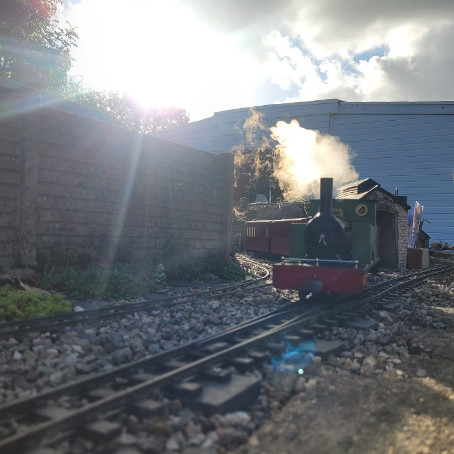
Playing trains is relaxing, challenging, exciting and FUN.
Steamers
We grease up and get STEAMY
Steam locomotives need preparing in order to run. We fill them with fuel and water. Oil the moving bits. Light them up and wait for the pressure to build up.
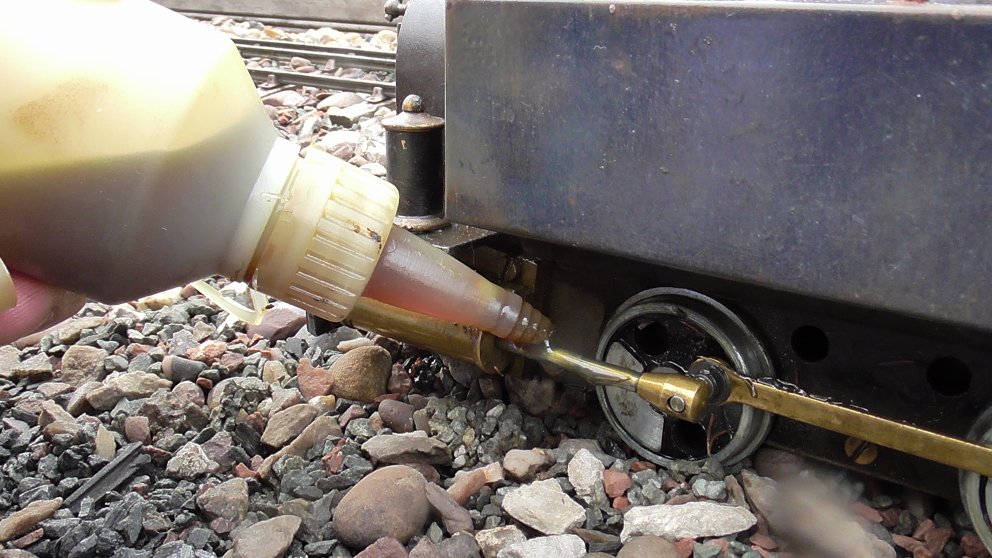
When the loco is ready they get very steamy, the pressure valves start blowing, and we fiddle around to calm them down ready to run.
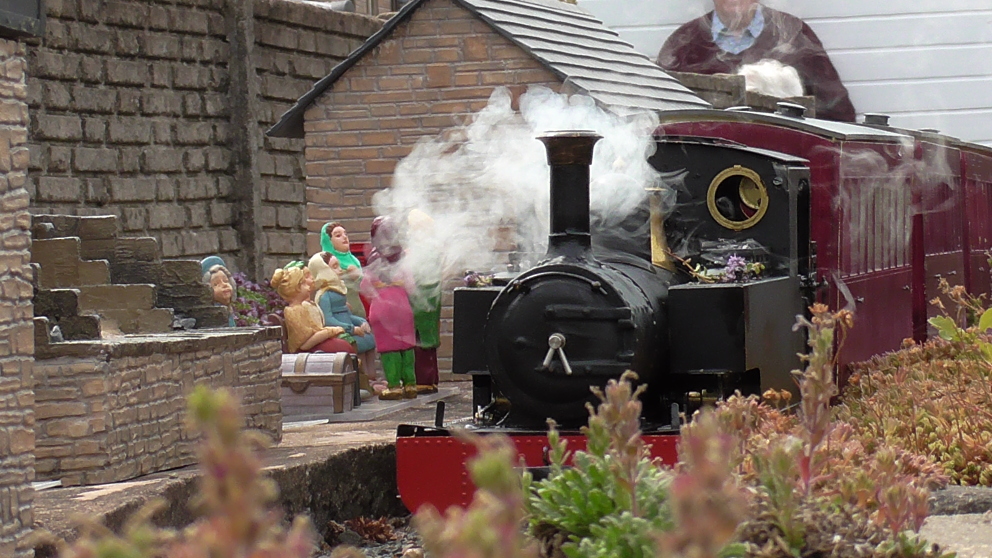
They chug, chuff and blow steam and begin to move.
Too slow and they stop. They MAY restart or they might need a little push.
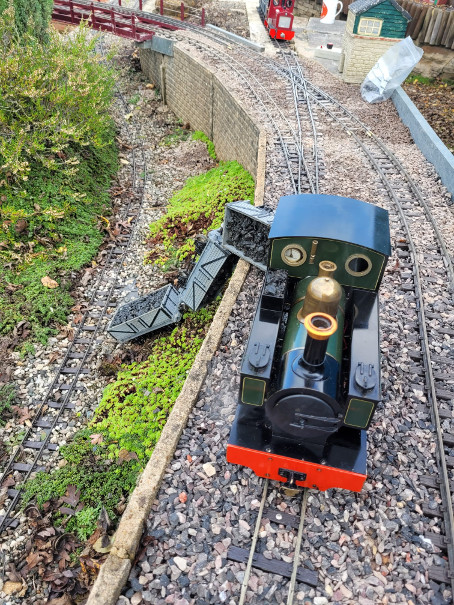
They may go too fast and nearly fly off the track.
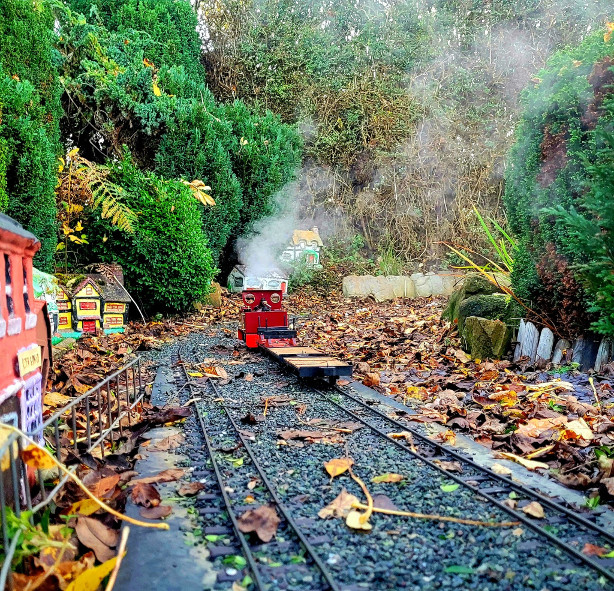
Whatever happens, it's always at a spot too far away to reach, so lots of chasing about begins.
Diesels
Reliable, controllable but still FUN
We call them diesels but really they are Battery Electrics.
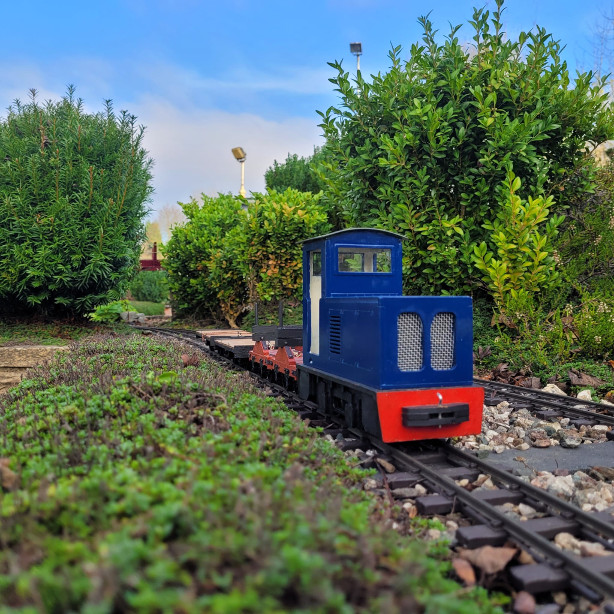
Track power is quite common in the garden but it doesn't work well with steamers, which tend to make the track very dirty.
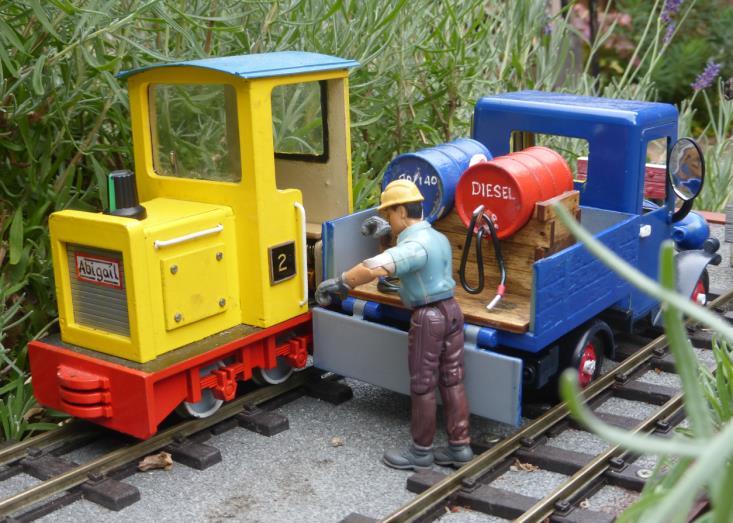
Our Diesels are normally self contained electric locos that are models of diesel locos.
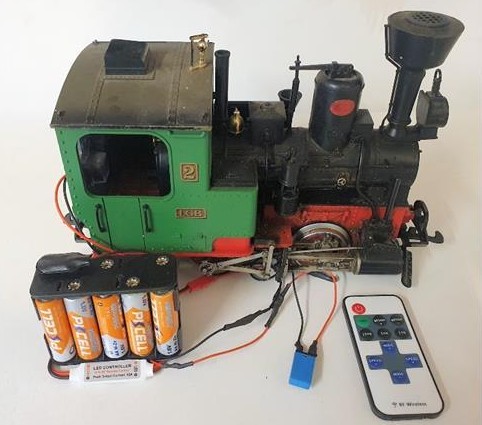
We have a few battery locos that LOOK like steamers.
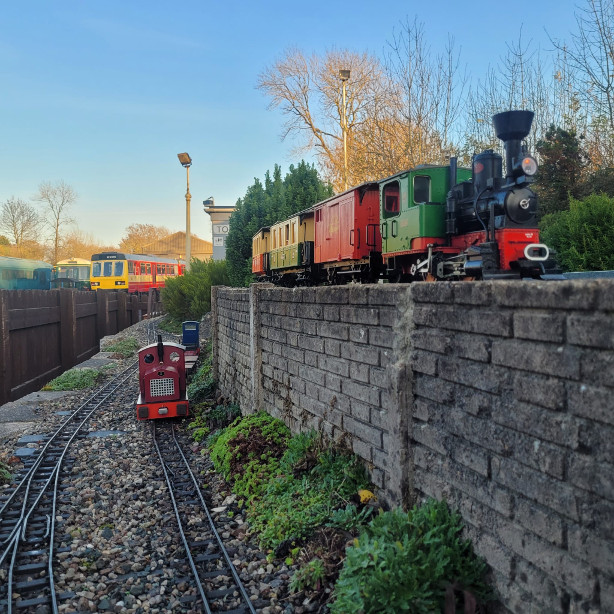
Dave Gordon's project to re-purpose an old LGB loco.
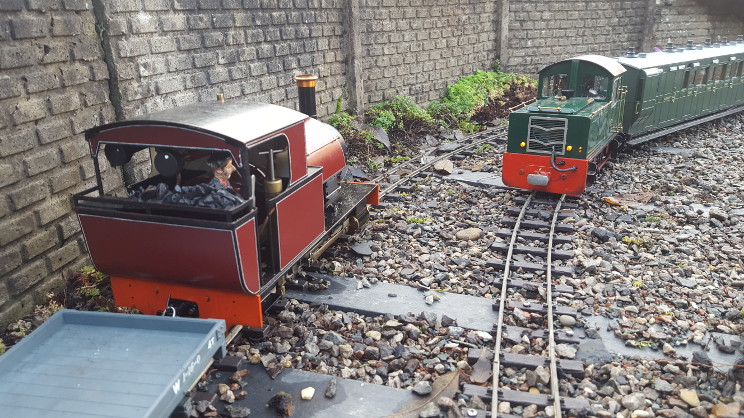
The really great thing about battery locos is that we can easily add things like working lights, sound effects and HOOTERS.
The Track
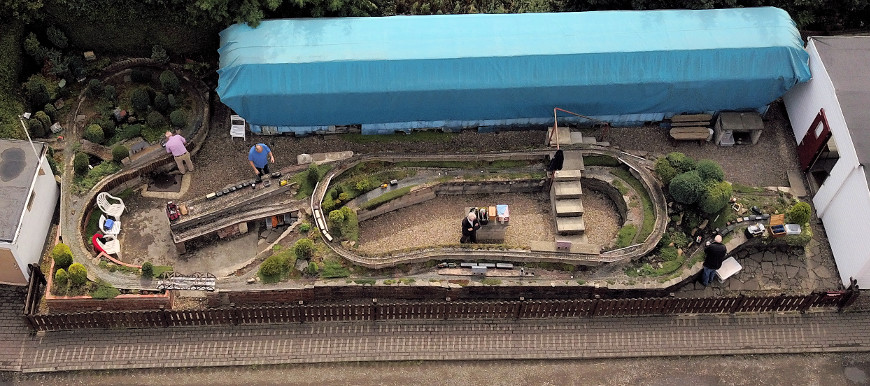
Lower Loop
The lower track is our main circuit with 100m in a scenic loop.
Front of layout at the bottom.
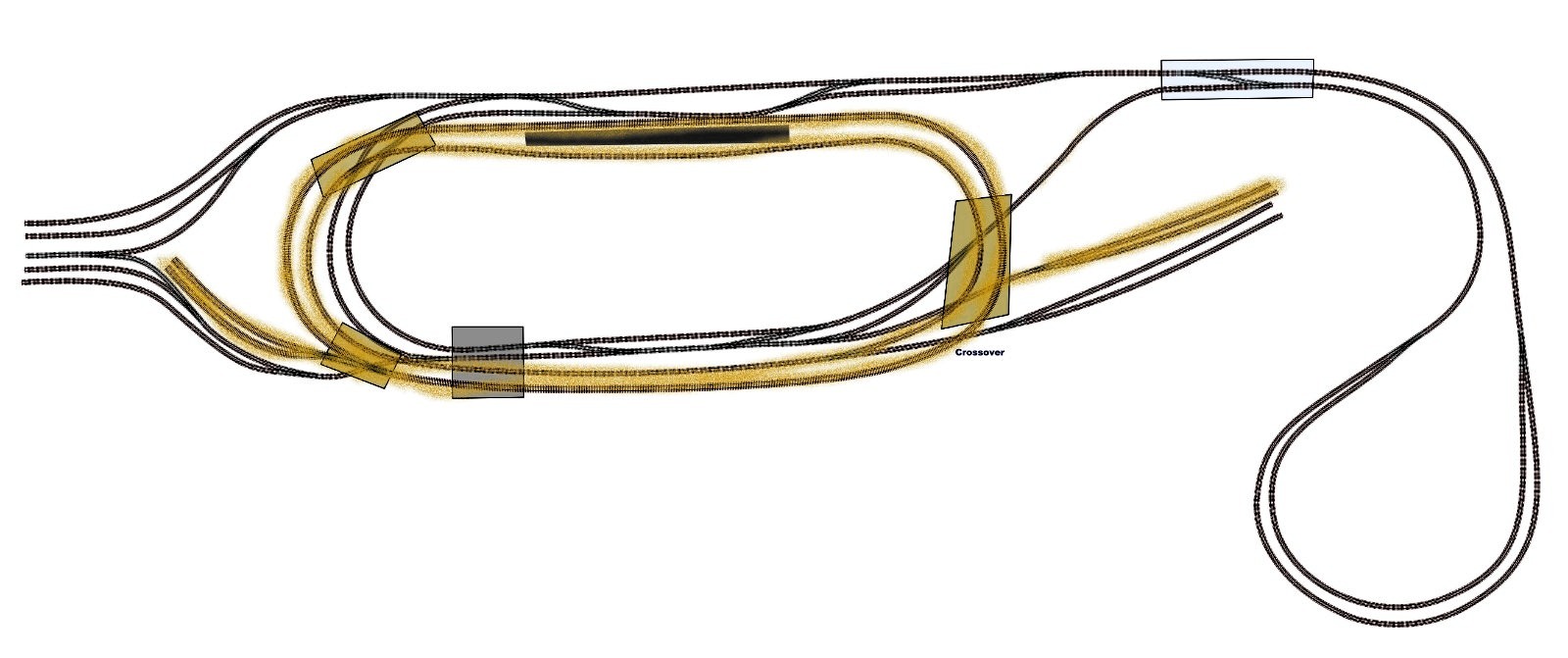
Track Layout (not to scale) Black = Lower Layout with 32mm gauge Peco Track
Yellow Highlights = Upper Layout with 32mm track for the inner loop and 45mm track for the outer loop.
45mm sidings to the left and 32mm sidings to the right.
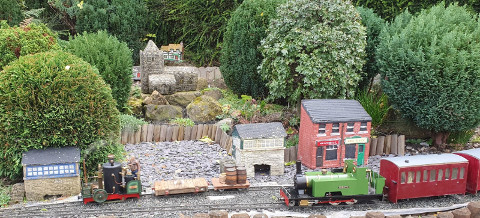
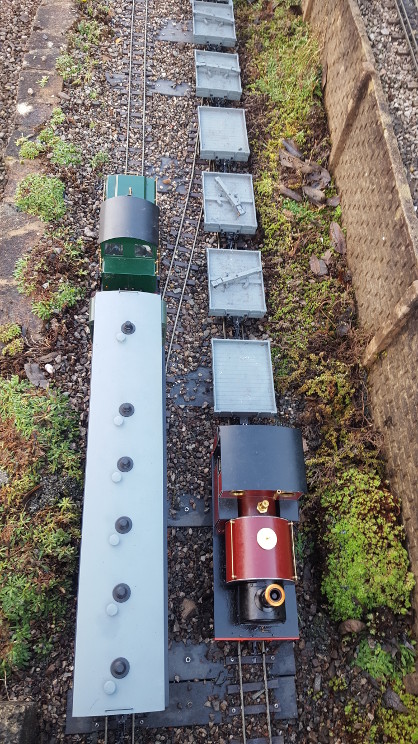
There are two stations with passing loops and steam up areas.
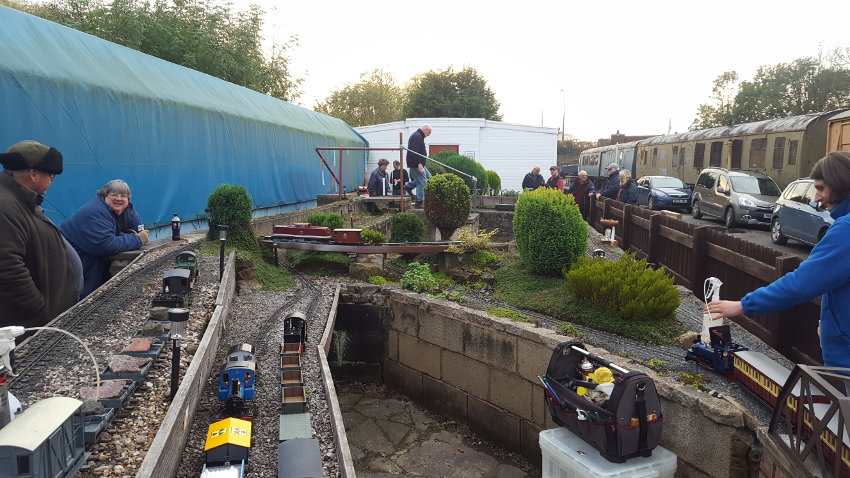
There are three sets of sidings for storage and preparation.
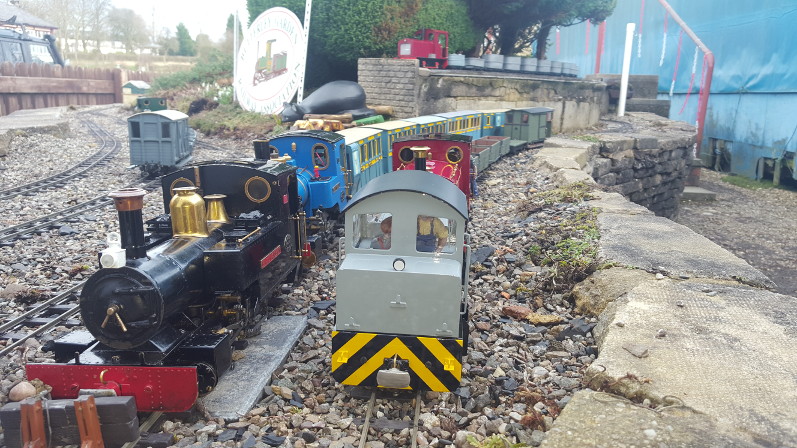
There is a short shunting siding where an engine can be turned to run in the opposite direction.
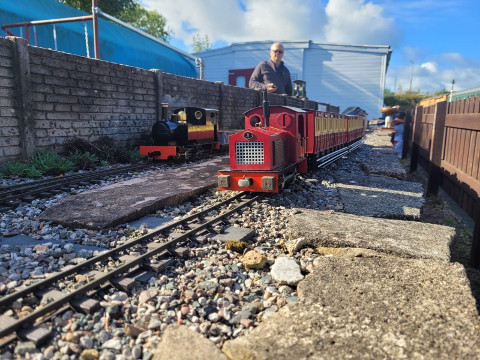
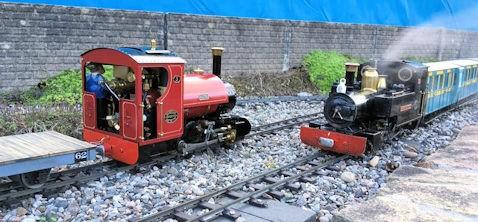
Members normally run in a clockwise direction, passing the front station from right to left.
We occasionally run in the opposite direction or do TWO WAY RUNNING.
Upper Loops
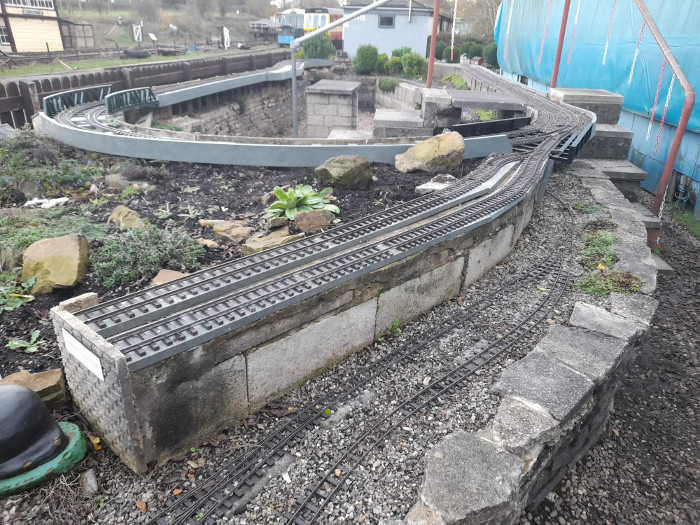
Two concentric loops, inner one 32mm gauge and outer one 45mm gauge
Our 45mm loop is electrified...
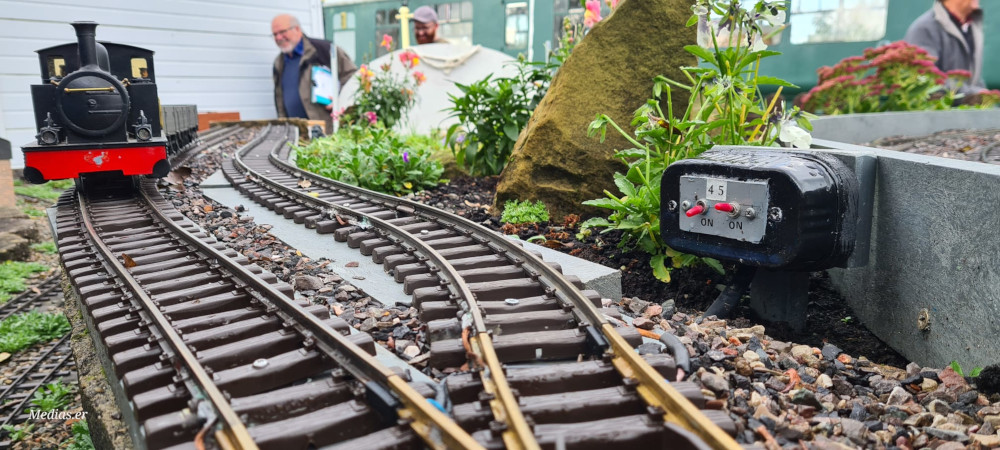
... with isolated sidings to allow a mix of track power and live steam.

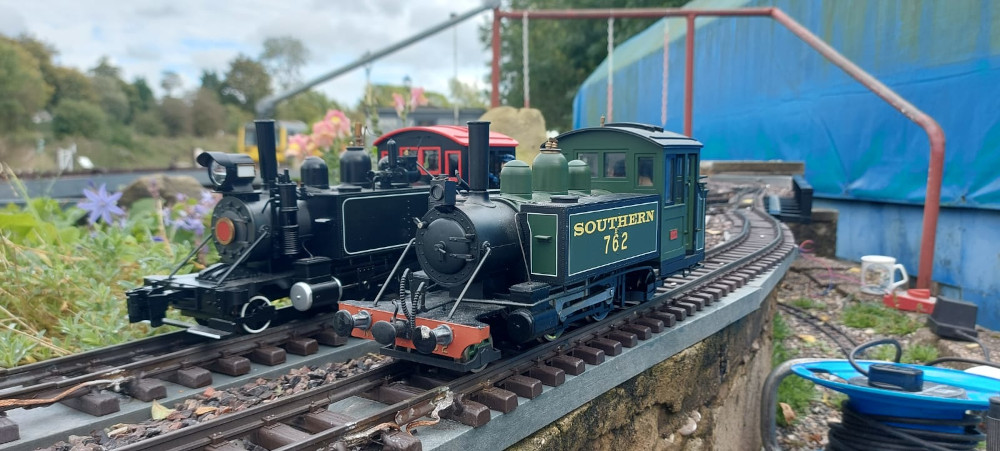
We are about install a new 45mm run around loop and extend the main 45mm sidings.
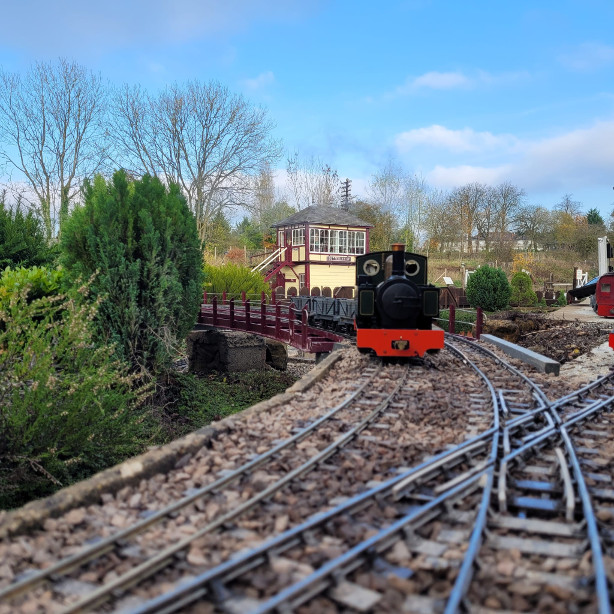
Members can run in whichever direction they fancy but it's easier for 32mm to go clockwise and 45mm to go anticlockwise
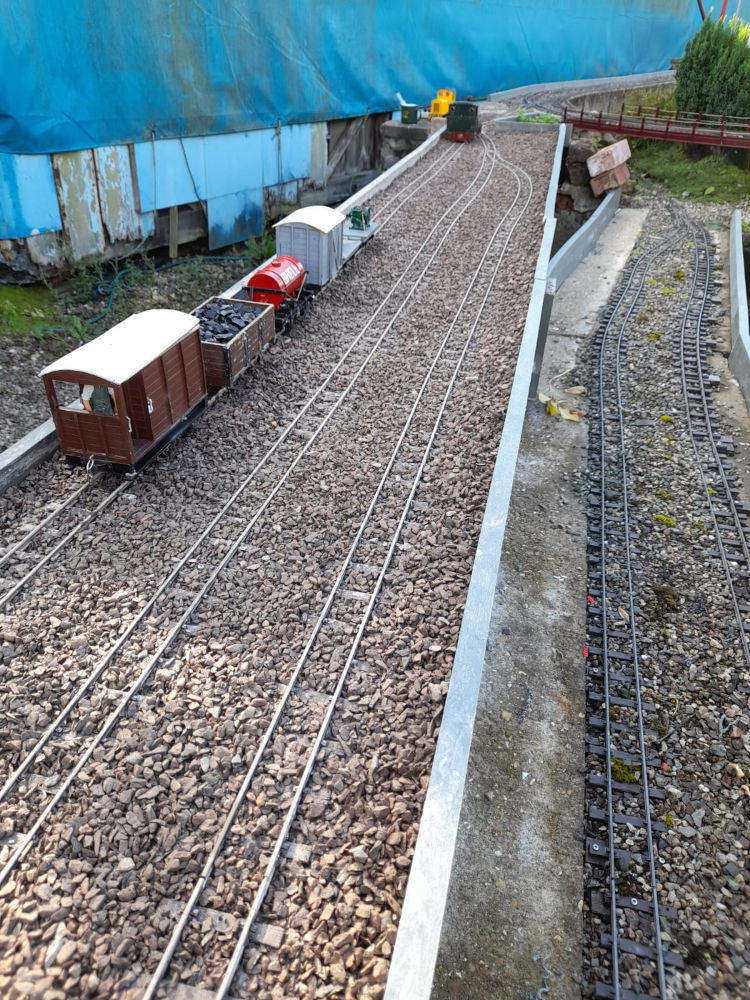
This arrangement makes access to the sidings much easier and makes it interesting to display trains passing each other.
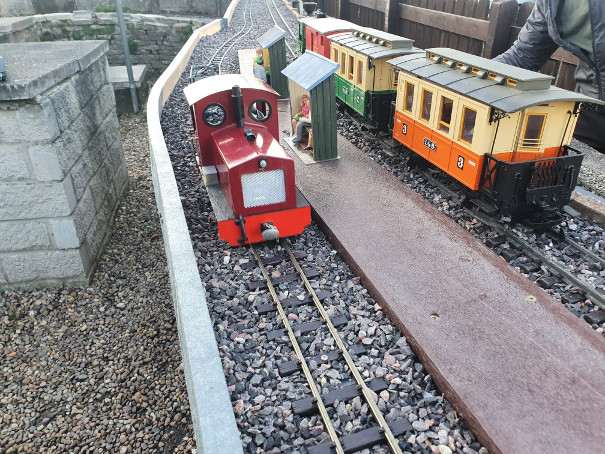
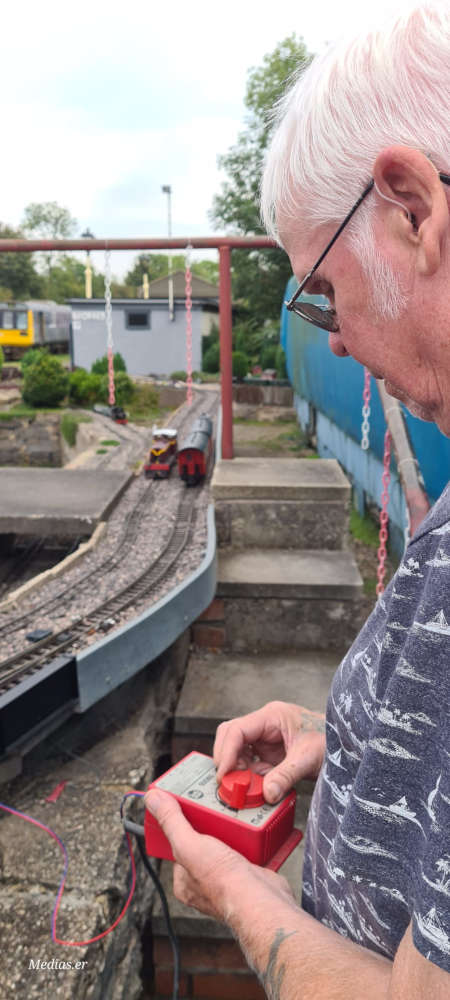
Both upper loops are at an easily accessible height and all of the track is visible. This makes it ideal for loco testing, coal firing and photography.
All track is reasonably level
This makes it very easy to run Manually Controlled trains (Not remote controlled).
If it's possible we allow visitors to have a go, especially younger ones.